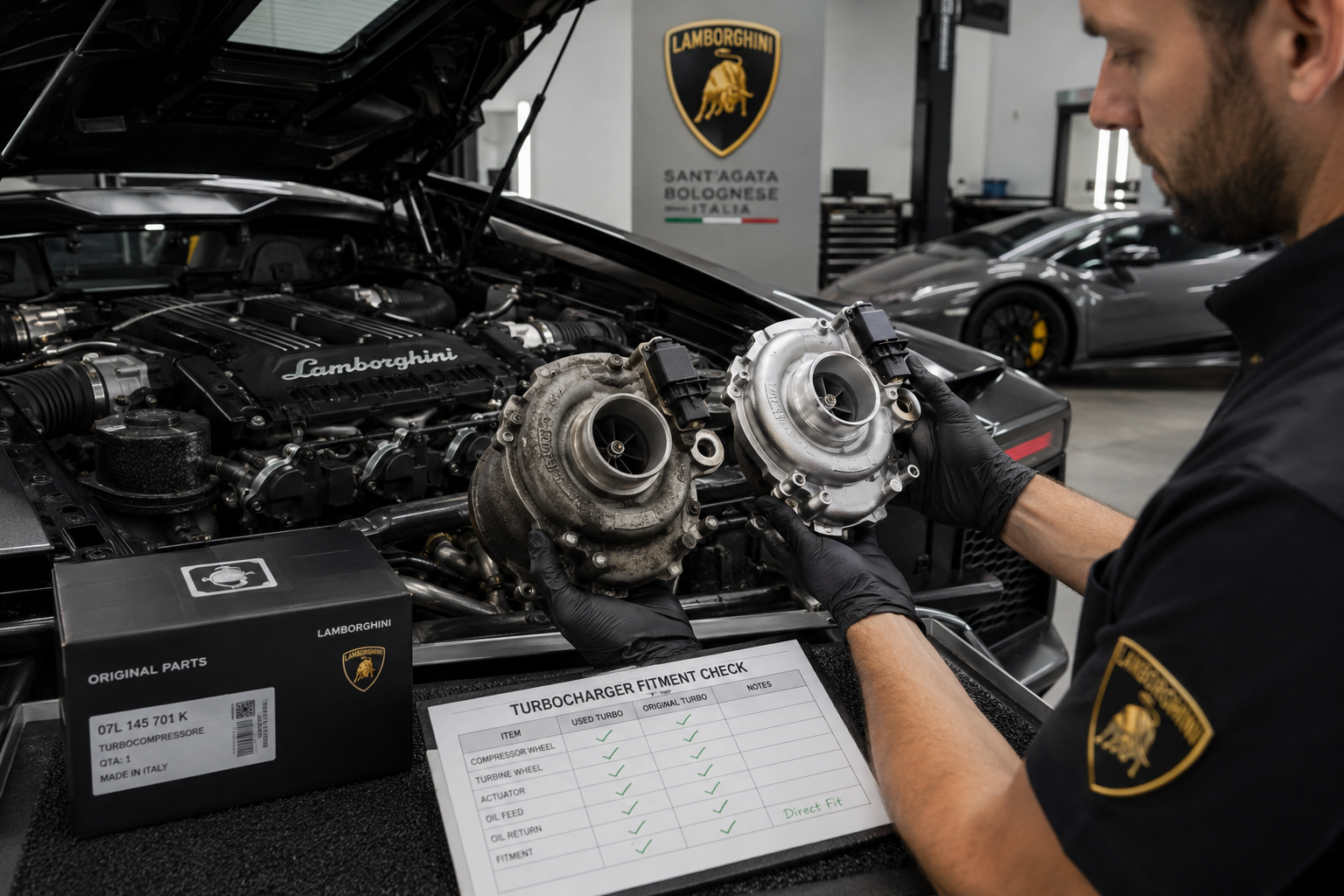
Why high performance turbochargers matter
High performance turbochargers sit at the center of many modern luxury and exotic-car powertrains. They help an engine move more air, burn fuel more effectively, and produce stronger acceleration without requiring a much larger engine. For buyers of certified used luxury-car parts, understanding how high performance turbochargers work can make the difference between choosing a part that supports clean, confident performance and choosing one that creates fitment, boost, or reliability issues later.
The appeal is simple: more usable power, sharper mid-range response, and a driving character that feels effortless when the system is correctly matched. In vehicles from brands such as Ferrari, Maserati, Lamborghini, and Bentley, turbocharging is rarely just about peak horsepower. It is also about smooth delivery, thermal control, precise calibration, and preserving the refined feel expected from a luxury performance car. That is why high performance turbochargers should be evaluated as part of a complete system rather than as isolated bolt-on parts.
How high performance turbochargers work
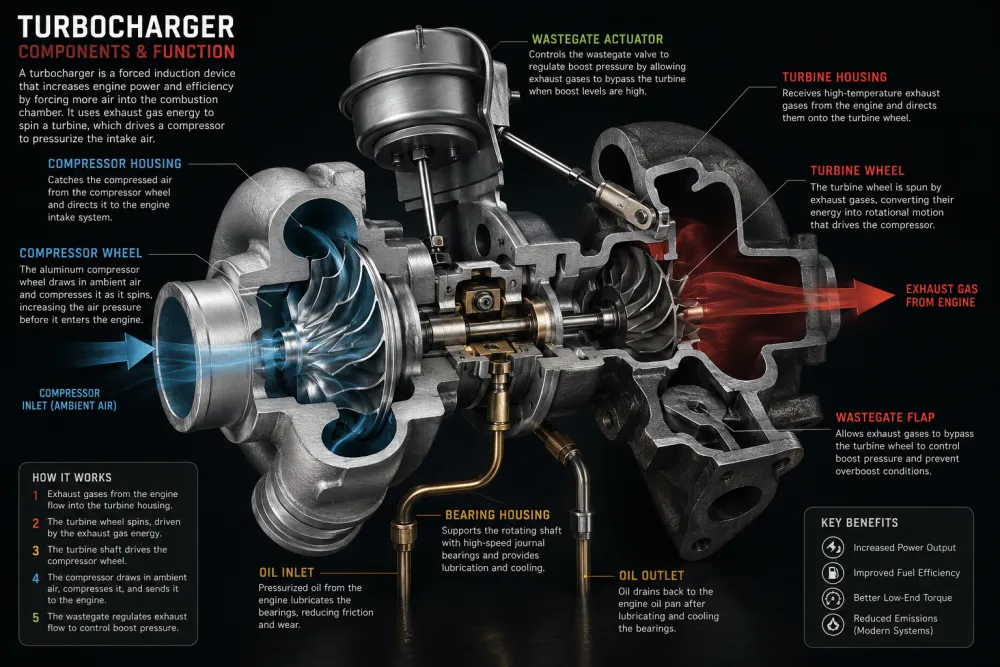
A turbocharger uses exhaust gas energy to spin a turbine wheel. That turbine is connected to a compressor wheel, which forces more air into the engine. More air allows the engine management system to deliver the right amount of fuel and create more power. In basic terms, high performance turbochargers turn otherwise wasted exhaust energy into extra engine output.
The details matter, though. Compressor size, turbine housing design, bearing type, actuator control, oil supply, cooling, and exhaust flow all shape how the turbo behaves. A larger turbo may support more airflow, but it may also take longer to respond if it is not matched to the engine. A smaller turbo may respond quickly but become restrictive at higher power levels. On a luxury performance vehicle, the best result is usually not the most aggressive possible setup; it is the setup that matches the vehicle’s engineering, software, drivetrain, and intended use.
Boost pressure and response
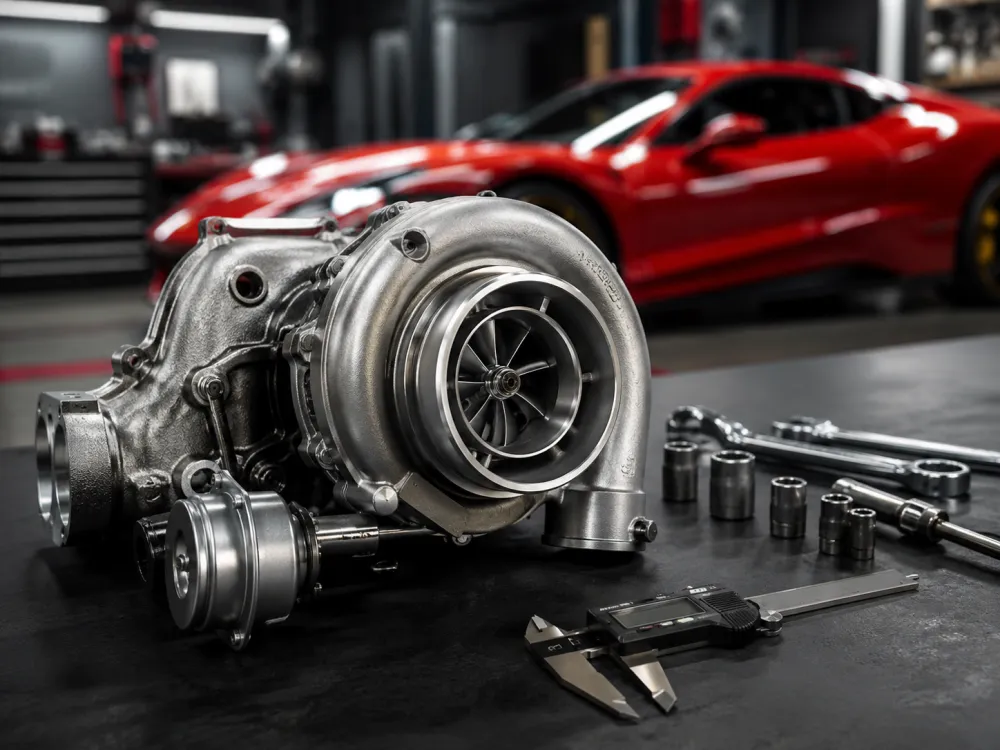
Boost pressure is one of the most discussed parts of turbocharging, but it should not be viewed alone. Two turbochargers can run similar boost levels while producing very different airflow, temperature, and response characteristics. High performance turbochargers are valuable because they can help deliver boost in a controlled, efficient way when they are correctly specified.
Response is just as important as peak output. A car that builds boost smoothly feels easier to drive, especially in traffic, on highways, or during spirited back-road use. For B2B buyers, response also affects customer satisfaction after installation. A part that looks right but does not match the expected turbo behavior can lead to complaints about lag, overboost, underboost, noise, or inconsistent acceleration.
What to inspect before buying
When evaluating used high performance turbochargers, condition and compatibility should come before price. Start with the part number, vehicle application, engine code, and model year. Small production differences can matter, especially on high-end cars where hardware revisions, mounting points, sensor locations, or actuator types may change across trims or years. Buyers browsing broader part options can start with the main parts categories and then narrow the search by brand, model, and component type.
Visual inspection is the next step. Look for damaged compressor blades, cracked housings, heavy oil residue, stripped threads, broken studs, worn actuator arms, or signs of foreign-object damage. Some oil staining can be normal in related intake plumbing, but heavy wet oil inside the compressor housing may point to seal, ventilation, or engine-related issues. Shaft play should also be considered carefully. A small amount of movement can exist in some designs when the turbo is not pressurized with oil, but excessive contact between the wheel and housing is a warning sign. Used high performance turbochargers should also be checked for heat damage, because extreme exhaust temperatures can stress housings, wastegate areas, and fasteners over time.
Fitment and matching
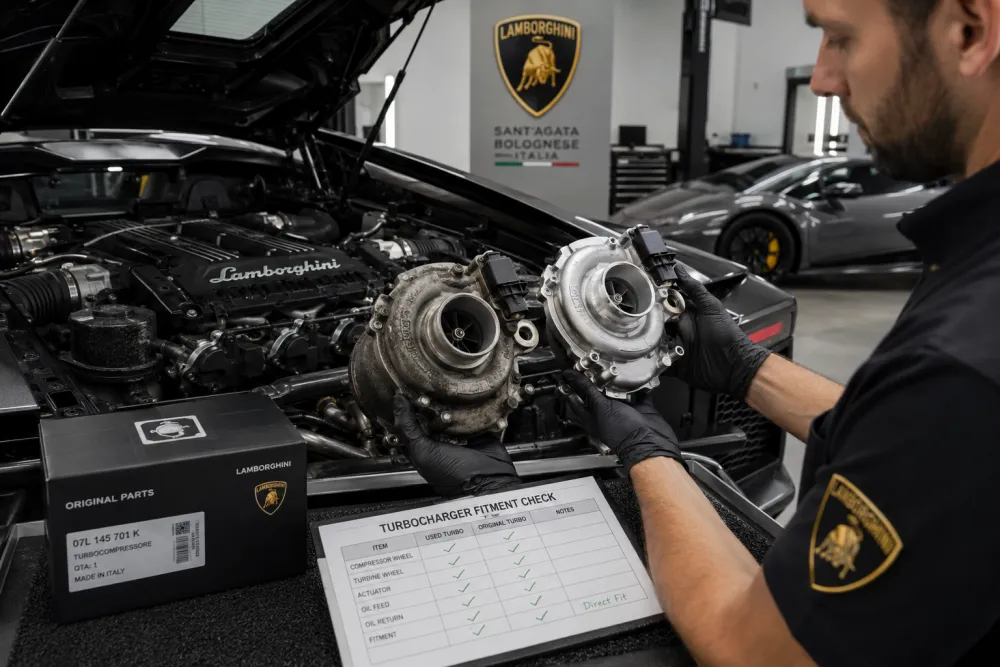
Fitment is not only about whether the part bolts on. It is about whether the turbocharger matches the car’s oil lines, coolant lines, exhaust connection, intake routing, sensors, actuator control, and engine calibration. For example, a turbocharger from a closely related model may look similar but use a different wastegate actuator or compressor outlet. That difference can turn a simple repair into a longer diagnostic job.
This is especially important for shops and resellers. Before purchasing high performance turbochargers, confirm the original equipment number, left-side or right-side position where relevant, and whether any included accessories are required for the installation. If the turbo came from a dismantled car, details about the donor vehicle can be useful. You can review available donor inventory through dismantled vehicles when matching parts to a specific luxury-car platform.
Used versus new turbochargers
New turbochargers can be the right choice in some situations, especially when a buyer wants untouched hardware or when the original failure caused major contamination. However, used high performance turbochargers can make sense when the part is properly identified, inspected, and sourced from a compatible vehicle. This is particularly true for luxury and exotic cars, where original components can be expensive, availability may vary, and preserving the factory-style setup may be more attractive than moving to a heavily modified aftermarket configuration.
For many buyers, the goal is not to chase the largest possible power figure. The goal is to restore the car’s intended performance, maintain drivability, and avoid unnecessary changes to surrounding systems. A well-matched used turbocharger can support that goal when the condition is strong and the application is correct. B2C buyers often care about getting their car back to its expected feel. B2B buyers often care about repeatable fitment, fewer delays, and fewer surprises during installation. In both cases, the best buying process is careful, part-number-driven, and realistic about the condition of related parts such as intercoolers, oil feed lines, gaskets, clamps, sensors, and exhaust hardware.
Supporting parts and installation planning
High performance turbochargers rarely fail or perform in isolation. A turbocharger depends on clean oil, correct oil pressure, stable cooling, leak-free intake plumbing, unrestricted exhaust flow, and accurate electronic control. Before installation, inspect the surrounding system. A clogged oil feed line, damaged intercooler, cracked hose, failing diverter valve, or contaminated intake tract can shorten the life of the replacement turbocharger or make a good part seem faulty.
Planning also matters. Replace gaskets and single-use hardware where required. Confirm whether the oil system needs flushing. Check the intercooler and intake pipes for debris if the previous turbo failed mechanically. Make sure the engine management system has no unresolved faults before assuming the turbocharger is the only issue. For buyers comparing options online, a targeted search such as high performance turbochargers can be a useful starting point, but the final decision should still be based on exact fitment and condition.
Questions to ask
Before buying, ask what vehicle the part came from, whether the exact part number is visible, what is included, and whether the turbocharger is left-side, right-side, front, rear, or single-unit depending on the engine layout. Ask for clear photos of the compressor wheel, turbine side, actuator, flanges, and identification tags. If anything is unclear, it is better to verify before ordering than to discover a mismatch during installation.
For complex fitment questions, buyers can use the contact page to request help before making a decision. This is especially useful when comparing high performance turbochargers across model years, engine variants, or luxury brands with several closely related part designs.
Choosing the right turbocharger
The right turbocharger is the one that fits the car, supports the intended performance level, and works with the surrounding system. That may sound obvious, but it is easy to be distracted by aggressive specifications, visual similarity, or price alone. High performance turbochargers are precision components, and small differences can affect boost control, drivability, emissions equipment, installation time, and long-term satisfaction.
For a private owner, the smartest path is usually to match the original specification unless the car is already built around a different setup. For a repair shop, the smartest path is to confirm the vehicle identification details, photograph the original component, compare part numbers, and document what is included with the replacement. For a reseller or specialist, the smartest path is to treat turbochargers as high-value technical components that need accurate labeling and careful handling.
Luxury cars reward precision. When high performance turbochargers are selected with the same level of care as the vehicles they belong to, they can help preserve the acceleration, smoothness, and character that make these cars desirable in the first place.