Convertible top guide for luxury cars
Why convertible top condition matters
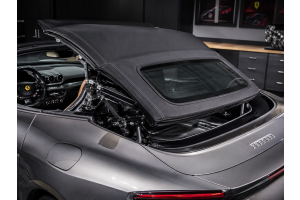
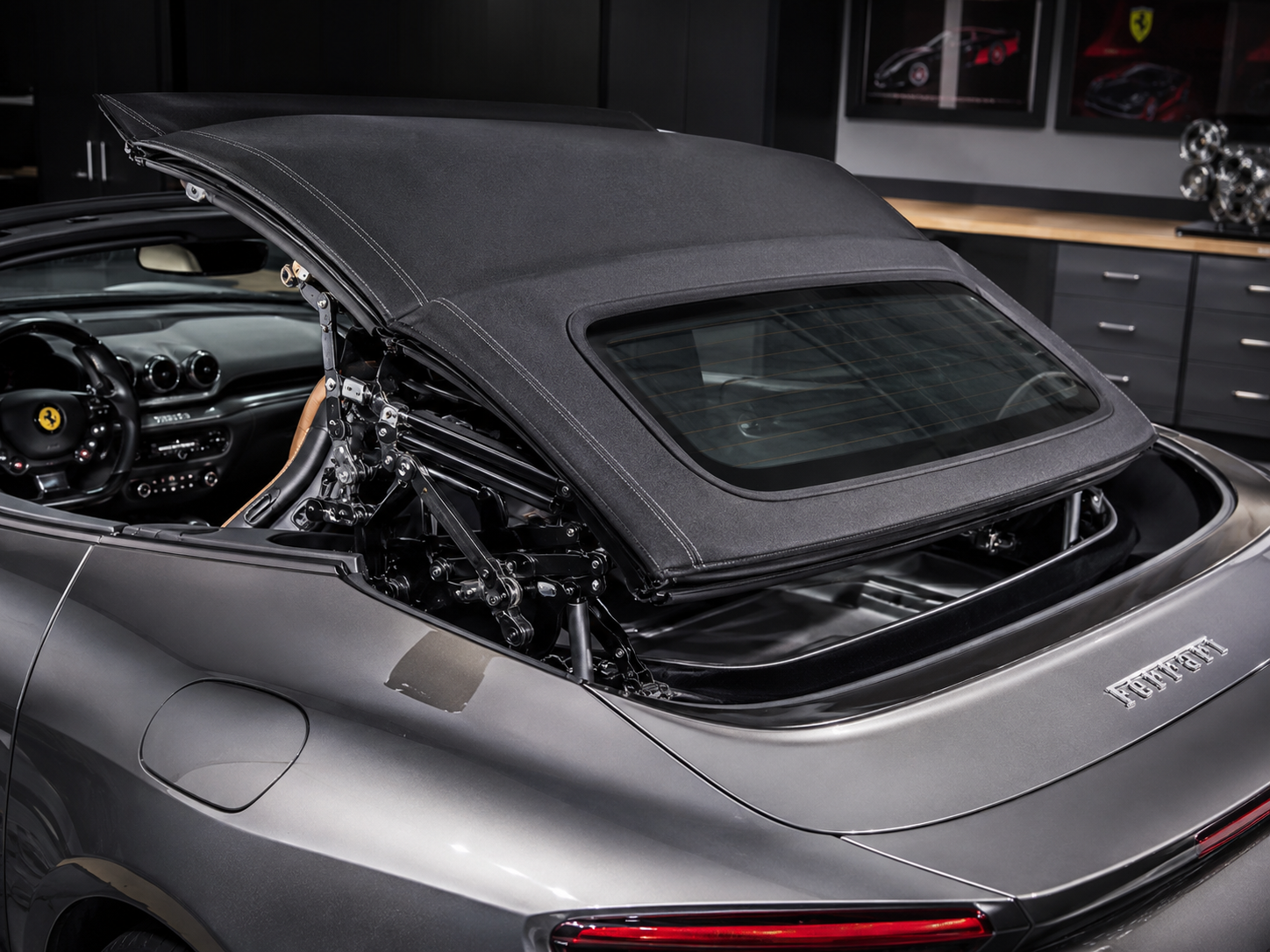
A convertible top is one of the most visible and functional parts of a luxury convertible. It shapes the car’s profile, protects the cabin, helps control wind noise, and plays a major role in the overall ownership experience. When it works well, the roof disappears into the background and lets the car feel effortless. When it fails, it can create water leaks, warning lights, rattles, slow operation, and a cabin that feels far less refined than the badge suggests.
For buyers, repair shops, restorers, and specialty parts resellers, the challenge is that a convertible top is rarely just one simple part. It may include fabric or vinyl outer material, an inner headliner, a rear glass panel, latches, control modules, hydraulic cylinders, motors, frame arms, weather seals, tension cables, and trim pieces. A small failure in one area can look like a full roof problem, while a worn exterior cover can hide a mechanism that still has valuable usable components. That is why understanding the system before buying replacement parts can save money and reduce installation surprises.
Common convertible top problems
The most obvious issue is cosmetic wear. Fading, fraying, loose stitching, cloudy rear glass, and cracked binding can make even a well-kept car look tired. On luxury vehicles, this matters because the roof is part of the design language. A clean paint finish and a worn roof rarely feel balanced. However, cosmetic wear is only one layer of the decision.
Mechanical and sealing issues can be more expensive. A convertible top that moves slowly, stops halfway, sits unevenly, or needs manual help may have weak hydraulic pressure, damaged pivots, misaligned frame sections, faulty sensors, or tired motors. Water leaks can come from compressed seals, blocked drains, poor adjustment, or damaged fabric. Wind noise can be caused by gaps around the header rail, side windows, or rear quarter area. In many cases, the smartest repair begins with identifying the exact failed part rather than replacing the entire roof assembly.
Fabric and outer material
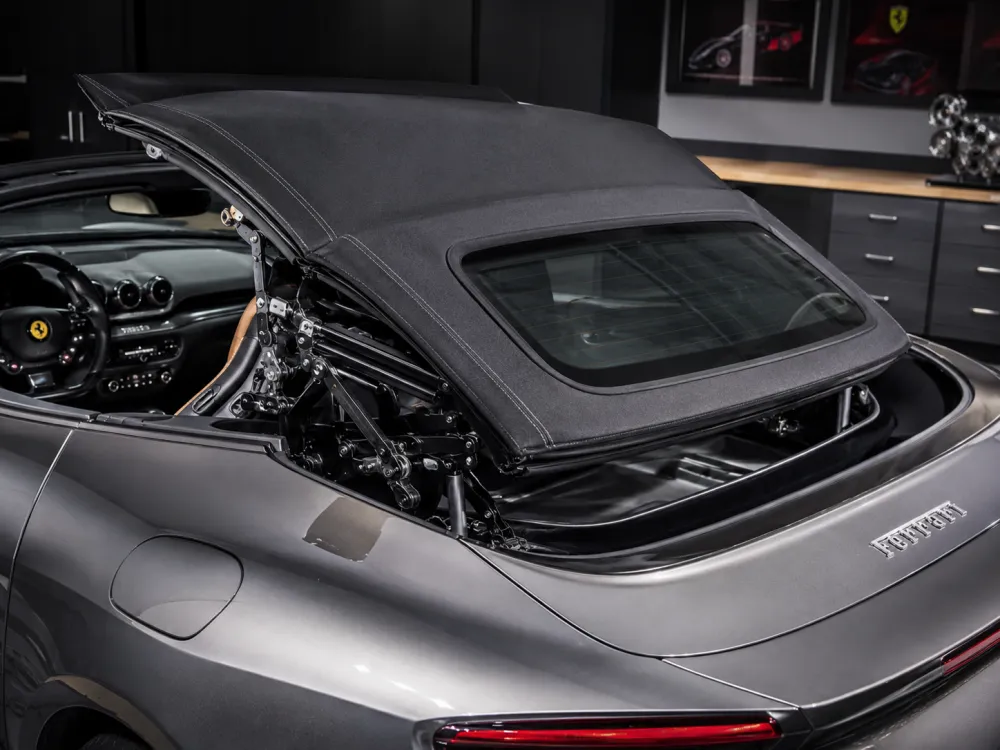
Soft roof material should be judged by more than color. Look for shrinkage, uneven tension, mildew, tears around stress points, separation near seams, and damage around the rear window. A used convertible top cover may be useful when the material is clean, the seams are intact, and the fit matches the vehicle generation exactly. For rare luxury models, finding a good used roof skin or related trim can sometimes be more practical than waiting for a new part.
Frame and mechanism
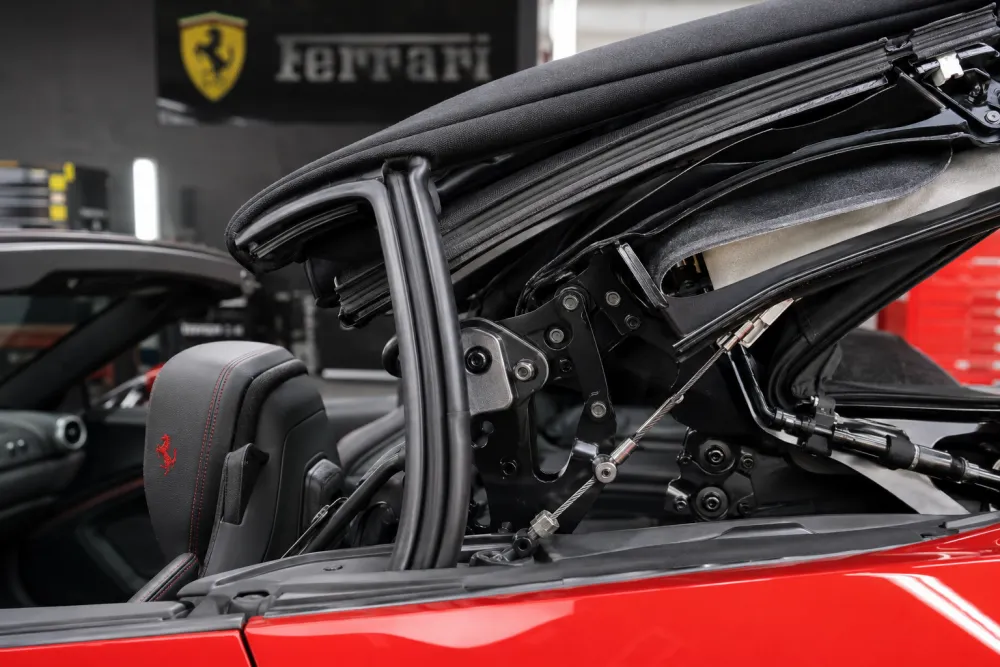
The frame is the structure that gives the roof its shape. It must fold in the correct sequence and land in the correct position every time. Even if the fabric is damaged, the frame can still be valuable if the arms are straight, hinges are tight, mounting points are clean, and there is no major corrosion or collision damage. Shops working on Ferrari, Maserati, Lamborghini, or Bentley convertibles often need very specific brackets, linkages, and hardware, so a dismantled vehicle can be a useful source for hard-to-find components.
Used parts versus new replacement
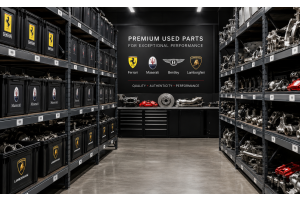
Buying used luxury-car parts is not only about lowering cost. It is also about access. Some convertible models have parts that become limited, backordered, discontinued, or difficult to identify from generic diagrams. A certified used convertible top component can be attractive when it comes from a compatible car, has been inspected, and matches the buyer’s needed configuration. This is especially relevant for repair businesses that need to return a car to the road without waiting months for a rare assembly.
There are still cases where new parts make sense. Fresh seals, adhesive materials, fasteners, and wear items may be better purchased new, especially when the old piece is compressed or brittle. The best solution is often a hybrid repair: used structural or electronic components paired with new consumables. For example, a roof frame, motor, latch, or trim panel may be sourced used, while seals or installation hardware are replaced during fitting. That approach can preserve the car’s original quality without treating every roof issue like a full-system replacement.
How to evaluate compatibility
Compatibility is the most important factor when buying a convertible top or related part. Luxury convertibles can change significantly between model years, trims, facelift versions, and regional specifications. A roof motor from one generation may look similar to another but use different connectors, mounting points, sensors, or software logic. Fabric color, headliner color, glass shape, latch type, and hydraulic layout can also vary.
Before ordering, gather the vehicle year, make, model, trim, VIN if available, roof color, interior color, and the exact part that failed. Photos help. A picture of the damaged area, the mounting location, the connector, and the full roof position can make identification much easier. For broad browsing, start with a category overview like luxury car parts categories. For model-specific research, the brand pages for Ferrari parts, Maserati parts, Lamborghini parts, and Bentley parts are useful places to begin.
What buyers should inspect
When considering a used convertible top assembly, inspect the roof in layers. Start with the outer surface, then move to the frame, seals, glass, wiring, motors, hydraulic components, and mounting points. Look for signs of water staining, broken clips, missing hardware, twisted frame sections, damaged plastic guides, and mismatched repairs. A roof that was removed carefully from a dismantled vehicle is usually easier to reuse than one that was separated without attention to connectors and brackets.
B2C buyers should focus on fit, visible condition, and whether the part solves the real problem. B2B buyers, including repair shops and resellers, should also think about installation time, customer expectations, documentation, and whether the component can be tested before fitting. A convertible top repair can become labor-intensive, so the part should be as complete and clearly identified as possible. For shoppers comparing availability from dismantled cars, dismantled vehicles can be a practical research path.
Questions before buying
Ask whether the part includes the frame, fabric, glass, headliner, seals, motors, latches, or only a specific component. Confirm the donor vehicle details and compare photos against the car being repaired. Ask about visible wear, storage condition, and any known damage. If the goal is to replace only a cable, cylinder, trim piece, or control part, avoid paying for a complete convertible top unless the extra components are genuinely useful.
Search strategy for luxury convertible parts
Search terms matter. A buyer might call the same part a soft top, cabriolet roof, roof assembly, convertible roof, top frame, folding roof, hydraulic roof motor, or rear roof glass. Because terminology varies by brand and market, it can help to search both broad and specific phrases. For example, browsing a direct search for convertible top parts may uncover listings that a narrower phrase would miss.
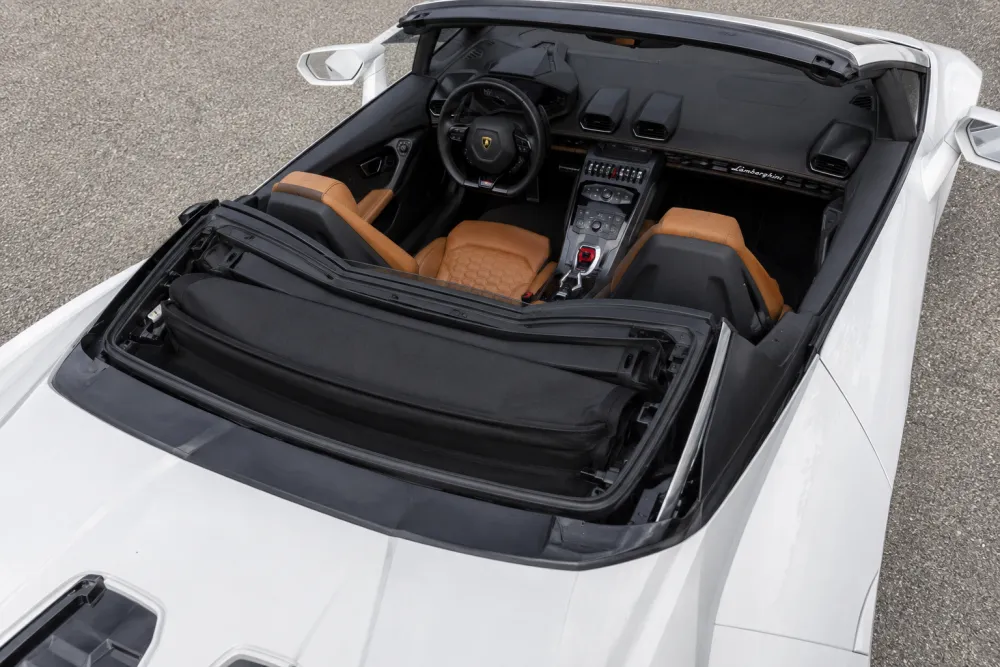
For higher-value cars, patience and accuracy beat rushed ordering. A Ferrari convertible top part may not interchange with a visually similar Maserati part, and a Bentley roof seal may vary by body style or production period. Lamborghini convertible components can be especially dependent on exact model and generation. The more precise the information, the more likely the part will fit correctly the first time.
Final thoughts
A convertible top is both a design feature and a technical system. It must look right, seal properly, move smoothly, and match the car’s premium character. Whether the buyer is restoring a weekend car, repairing a customer vehicle, or sourcing inventory for a specialist shop, the best results come from careful inspection, accurate compatibility checks, and realistic expectations about used parts.
Certified used luxury-car parts can be a strong option when the right component is identified and the condition is understood. For complex roof systems, it is often worth comparing complete assemblies with smaller parts such as motors, frames, latches, seals, or trim. When details are unclear, sending photos and vehicle information through contact can help move the search in the right direction before purchase.